
Last Updated on June 12, 2026
If you have a kitten, you know how quickly fleas can take over their tiny bodies—and your home. Fleas aren’t just annoying; they can make your kitten itchy, uncomfortable, and even sick.
You want the best flea treatment to keep your furry friend safe and happy. But with so many options out there, how do you choose what works best for your kitten’s delicate skin? Keep reading, because we’ll guide you through everything you need to know to protect your kitten from fleas—easily and effectively.
Your kitten’s comfort and health depend on it.
Credit: www.walmart.com
Why Flea Treatment Matters For Kittens
Flea treatment is very important for kittens. Kittens have small, delicate bodies. Fleas can cause serious problems for them. Treating fleas early keeps kittens healthy and comfortable. It helps stop fleas from spreading to your home. Understanding why flea treatment matters protects your kitten’s well-being.
Health Risks Of Fleas
Fleas can cause anemia in kittens. They suck blood and make kittens weak. Severe infestations can be life-threatening. Fleas also cause constant itching. This leads to skin wounds and infections. Young kittens are more vulnerable to these effects.
Flea Allergies And Skin Issues
Some kittens develop flea allergy dermatitis. Their skin reacts strongly to flea bites. This causes redness, swelling, and hair loss. Scratching makes the problem worse. Treating fleas stops these painful skin problems early. Healthy skin means a happy kitten.
Potential For Disease Transmission
Fleas carry harmful bacteria and parasites. They can pass diseases like tapeworms to kittens. Fleas also transmit infections between pets and humans. Early flea treatment reduces the risk of disease. Protect your kitten from these hidden dangers.
Credit: www.pethealthclub.com
Safe Flea Treatment Options
Choosing safe flea treatment options for kittens is very important. Kittens have sensitive skin and small bodies. Some flea treatments made for adult cats can harm them. Use only products made for kittens. Careful selection helps keep your kitten healthy and happy.
Topical Treatments Suitable For Kittens
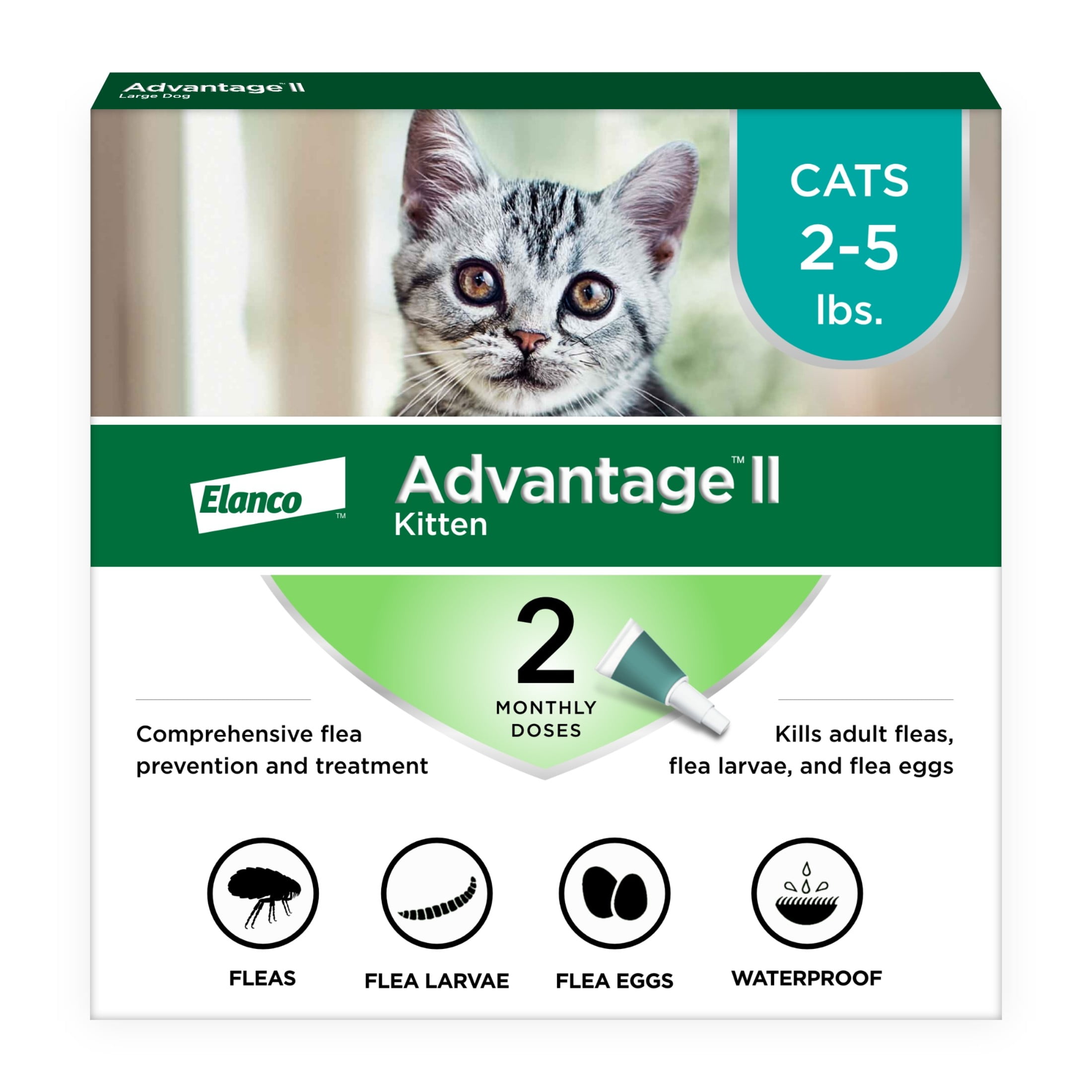
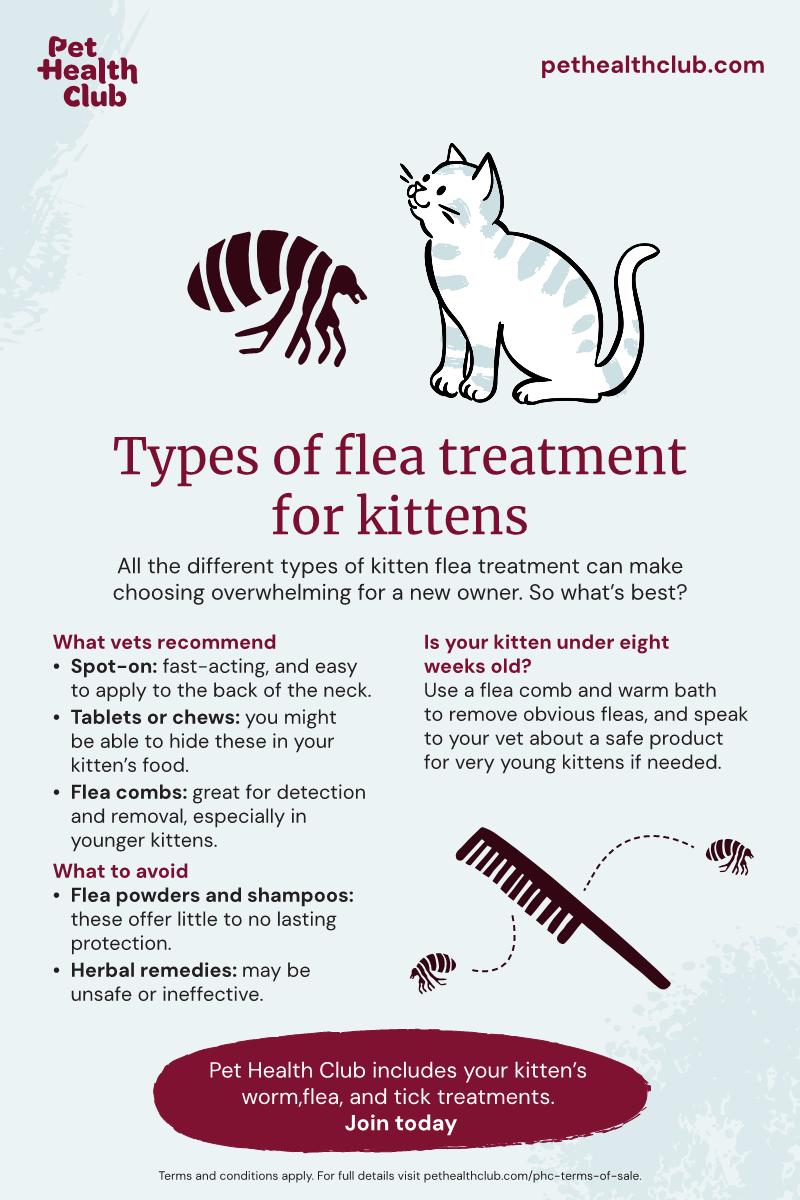
Topical flea treatments are drops applied to the kitten’s skin. They kill fleas quickly and stop new ones from growing. Many brands offer formulas safe for kittens as young as 8 weeks. Apply the treatment between the kitten’s shoulder blades. This spot is hard for them to lick. Follow the product instructions carefully for best results.
Oral Medications Approved For Young Cats
Oral flea medications come in chewable tablets or pills. Some are safe for kittens over 6 weeks old. These medicines work by killing fleas after they bite. The treatment also stops flea eggs from hatching. Always check the kitten’s weight before giving pills. Use only medicines prescribed or recommended by a vet.
Natural Remedies And Home Care
Natural flea remedies can help reduce flea problems. Regular brushing removes fleas and eggs from the kitten’s fur. Bathing with mild, kitten-safe shampoo also helps. Some natural oils, like neem or cedarwood, repel fleas. Use oils carefully and avoid direct contact with the kitten’s eyes and nose. Clean your kitten’s bedding and living area often to keep fleas away.
Choosing The Right Flea Treatment
Choosing the right flea treatment for kittens is very important. Kittens are small and sensitive. Their bodies react differently to flea medicines than adult cats. Picking the best treatment keeps your kitten safe and healthy. It also stops fleas quickly before they cause more problems.
Age And Weight Considerations
Kittens need flea treatments made just for their age and size. Some products are too strong for young kittens. Using the wrong dose can harm their skin or health. Always check the label for age and weight limits. Choose products that match your kitten’s current weight and age.
Consulting Your Veterinarian
Veterinarians know the safest flea treatments for kittens. They can suggest the best option based on health and lifestyle. Some kittens may have allergies or other health issues. Your vet can help find a treatment that avoids risks. Always ask your vet before starting any flea medicine.
Avoiding Harmful Ingredients
Some flea treatments contain chemicals that kittens should not have. Ingredients like permethrin or certain pesticides can be toxic. Read product labels carefully to avoid these harmful substances. Natural or vet-approved treatments often use safer ingredients. Protect your kitten by choosing gentle, tested flea products.
Applying Flea Treatments Correctly
Applying flea treatments correctly is important for your kitten’s health. Proper use helps get rid of fleas fast. It also keeps your kitten safe from harm. Follow clear steps to apply treatments well. Watch your kitten after applying the medicine. Know when to apply treatments again. This keeps fleas away for good.
Step-by-step Application Guide
First, read the instructions on the flea treatment package. Choose a quiet place to treat your kitten. Part the fur at the back of the neck. Apply the treatment directly to the skin. Use the full dose made for kittens. Avoid getting medicine on the fur only. Do not touch the kitten until the treatment dries. Wash your hands after applying the medicine.
Monitoring For Side Effects
Check your kitten for unusual behavior after treatment. Watch for scratching, redness, or swelling. Look for vomiting or tiredness. Some kittens may have mild side effects. Serious reactions need a vet’s attention. Keep your kitten calm and comfortable. Call your vet if you see strong side effects.
Frequency And Follow-up Care
Apply flea treatments as the package says. Most treatments need repeating every 3 to 4 weeks. Do not apply too often to avoid harm. Regular combing helps catch fleas early. Clean your kitten’s bedding and living area. Keep the environment flea-free to stop re-infestation. Follow the schedule to protect your kitten well.
Preventing Future Flea Infestations
Preventing future flea infestations is key to keeping kittens healthy and happy. Fleas cause itching, discomfort, and can lead to infections. Taking steps to stop fleas from returning protects your kitten and your home. Simple habits and good care make a big difference.
Maintaining A Clean Environment
Clean your kitten’s living area often. Wash bedding in hot water weekly. Vacuum carpets, rugs, and furniture regularly. Flea eggs and larvae hide in dirt and dust. Dispose of vacuum bags or empty canisters outside. Keep floors and corners free of debris. This reduces places fleas can live and grow.
Regular Grooming Practices
Brush your kitten daily with a fine-toothed comb. Check for fleas, flea dirt, or skin irritation. Bathing your kitten with mild shampoo helps remove fleas. Be gentle and use warm water. Grooming also keeps your kitten’s coat healthy. It’s a chance to spot fleas early and stop infestations.
Using Preventative Products Safely
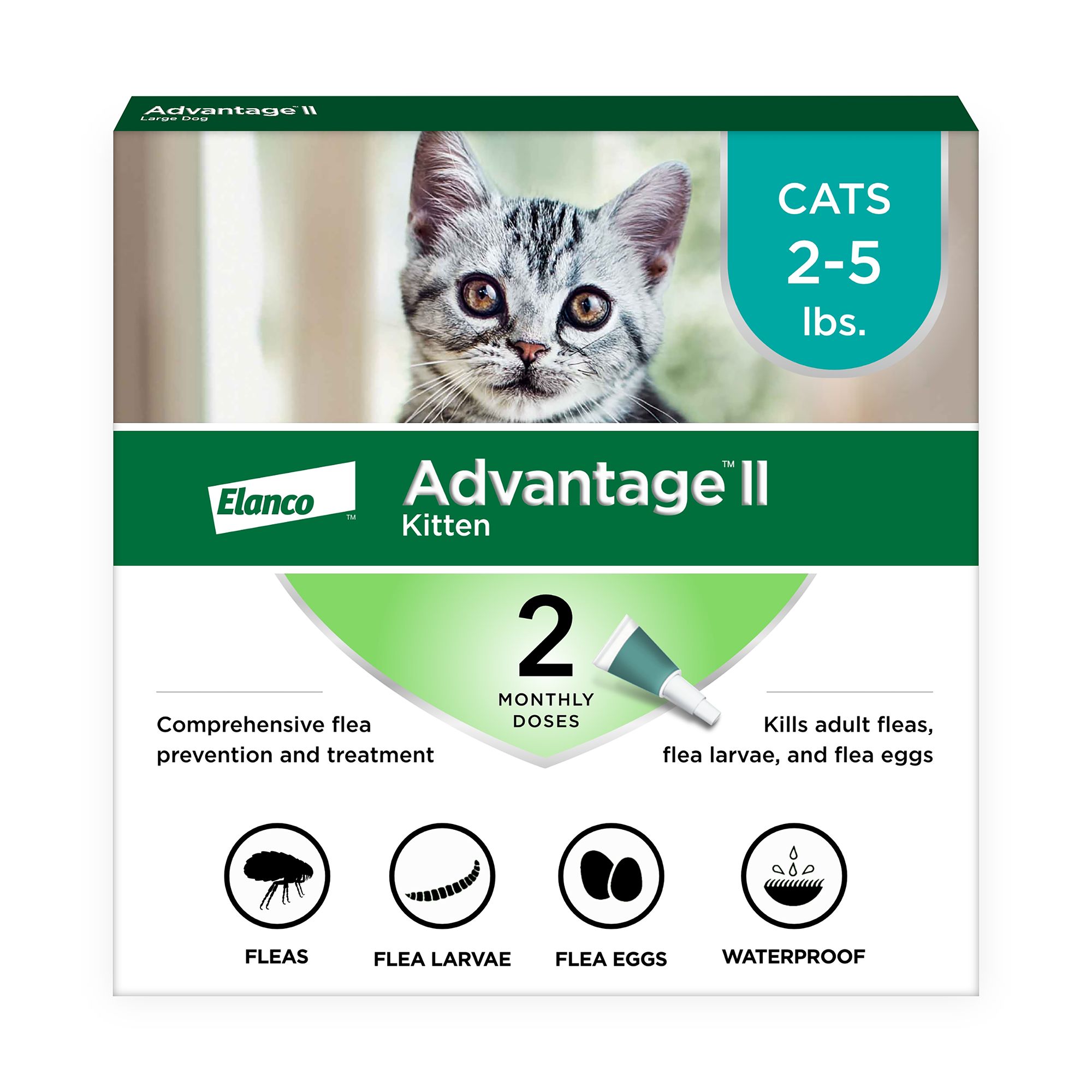
Use flea preventatives made for kittens only. Follow the instructions carefully and use the correct dose. Avoid products meant for adult cats or other animals. Consult your vet before starting any treatment. Preventative products kill fleas before they multiply. Safe use protects your kitten’s health and comfort.
Credit: www.petsmart.com
When To Seek Veterinary Help
Knowing when to seek veterinary help for your kitten’s flea treatment is important. Fleas can cause serious problems if not treated properly. Some signs show that home treatments are not enough. Professional care may be needed to keep your kitten safe and healthy.
Signs Of Severe Infestation
Look for many fleas on your kitten’s fur. Constant scratching or biting is a warning. Bald patches and sores can appear. Your kitten may seem weak or tired. These signs mean fleas have caused harm. A vet can treat heavy infestations safely.
Allergic Reactions To Treatments
Some kittens react badly to flea medicines. Watch for redness or swelling on the skin. Your kitten may vomit or have diarrhea. Breathing problems or lethargy can also happen. Stop using the product and see a vet fast. Vets can find safe options for sensitive kittens.
Persistent Flea Problems
If fleas keep coming back after treatment, it needs attention. Fleas might be resistant to some products. Check your kitten and home for hidden fleas or eggs. A vet can suggest stronger or different treatments. Regular vet visits help prevent long-term flea issues.
Frequently Asked Questions
What Is The Safest Flea Treatment For Kittens?
The safest flea treatments for kittens are those specifically labeled for their age and weight. Options include kitten-safe topical solutions and oral medications. Always consult a veterinarian before use to avoid harmful chemicals and ensure the treatment suits your kitten’s health and age.
When Should I Start Flea Treatment For My Kitten?
Begin flea treatment as soon as you notice fleas or at 8 weeks old, whichever comes first. Early treatment helps prevent infestations and discomfort. Always follow veterinary advice for the best timing and product choice to keep your kitten safe and flea-free.
Can Flea Treatments Harm Young Kittens?
Improper flea treatments can harm young kittens. Always use products approved for kittens. Avoid adult cat flea treatments as they may contain toxic ingredients. Consult a vet to choose safe options and apply treatments correctly to protect your kitten’s health.
How Often Should I Treat My Kitten For Fleas?
Typically, flea treatments for kittens are applied every 3-4 weeks. Follow the product instructions and vet recommendations. Consistent treatment prevents flea reinfestation and keeps your kitten comfortable and healthy throughout flea season or year-round if needed.
Conclusion
Treating fleas on kittens keeps them healthy and comfortable. Choose safe products made for young cats. Regular checks help catch fleas early and stop infestations. Clean your kitten’s bedding and living area often. Consult your vet for the best advice and treatments.
A flea-free kitten is a happy kitten. Keep up with care and watch your kitten thrive. Simple steps make a big difference in flea control. Your kitten deserves a clean, safe home to grow strong.