Last Updated on September 25, 2026
Responsible waste management is not just a buzzword—it’s a critical need for our environment, health, and future generations. Every day, people and businesses generate tons of waste, and how we handle it can make a huge difference. Poor waste management can lead to polluted water, dirty air, and overflowing landfills.
But with the right strategies, we can reduce pollution, save resources, and even create jobs. Many people know recycling is important, but responsible waste management is much more than just recycling bottles and cans. It’s about making smart choices from the start, understanding where our waste goes, and being part of the solution.
What Is Responsible Waste Management?
At its core, responsible waste management means handling waste in a way that protects people and the planet. This starts before waste is even created. It asks questions like: Do we really need this item? Can we reuse it? Can we recycle it? The main goal is to reduce how much waste goes to landfills and to avoid pollution. Responsible waste management involves several actions:
- Reducing waste by using less and choosing products with less packaging.
- Reusing items whenever possible.
- Recycling materials so they can become new products.
- Proper disposal of hazardous materials like batteries or electronics.
Many cities now use the “3Rs” (Reduce, Reuse, Recycle), but truly responsible waste management often goes further, adding more steps and focusing on the whole life cycle of products.
Why Responsible Waste Management Matters
The impact of waste is bigger than most people realize. According to the World Bank, the world generates over 2 billion tons of municipal solid waste every year, and this number is rising quickly. By 2050, it could reach 3.4 billion tons. If this waste is not managed properly, it can cause:
- Soil contamination from chemicals and plastics
- Water pollution from landfill leaks and illegal dumping
- Air pollution from burning waste
- Health risks like disease and breathing problems
On the other hand, responsible waste management helps:
- Save natural resources by recycling and reusing materials
- Reduce greenhouse gas emissions from landfills
- Create jobs in recycling, composting, and waste processing
- Protect wildlife and natural spaces
One non-obvious point: Waste is not just a problem for poor countries—high-income nations actually generate more waste per person, and their systems are not always perfect.
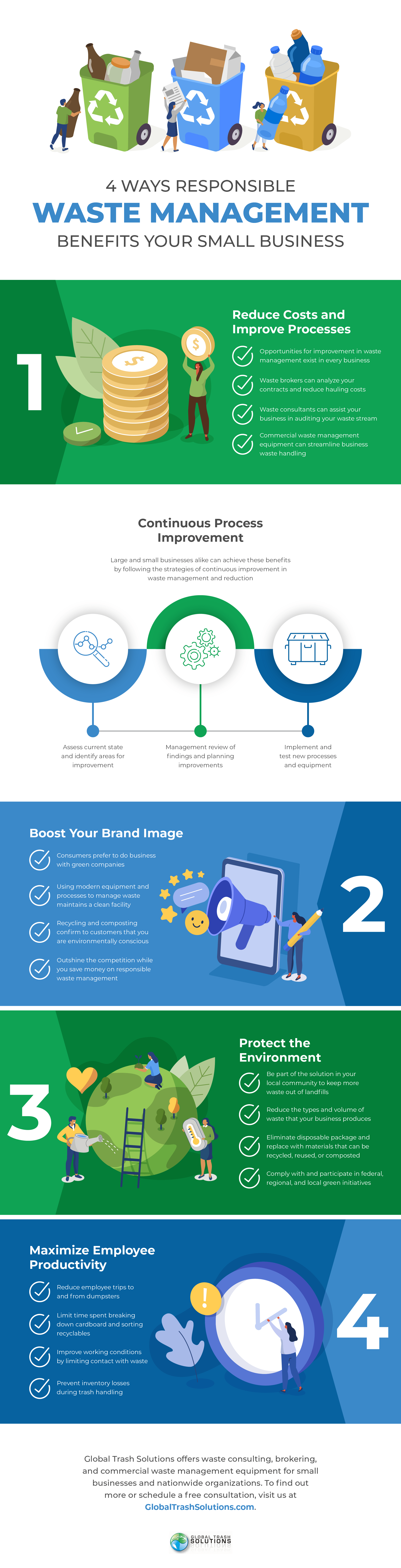
Credit: globaltrashsolutions.com
The Main Types Of Waste
Understanding different types of waste helps us manage them better. Here are the main categories:
| Type of Waste | Examples | Special Handling Needed? |
|---|---|---|
| Household Waste | Food scraps, paper, plastics | No, unless hazardous |
| Hazardous Waste | Batteries, paints, chemicals | Yes |
| Electronic Waste (E-waste) | Old phones, computers, TVs | Yes |
| Medical Waste | Syringes, bandages | Yes |
| Construction Waste | Concrete, bricks, wood | Sometimes |
| Industrial Waste | Chemicals, metals, sludge | Often |
Many people forget about e-waste, which is growing fast. Old electronics often contain toxic materials that can harm people and the environment if not handled correctly.
The 5 Steps Of Responsible Waste Management
Responsible waste management is often explained as a hierarchy. Here are the five steps, in order of priority:
- Prevention – Don’t create waste in the first place. For example, buy only what you need.
- Minimization – Reduce the amount of waste. Choose products with less packaging.
- Reuse – Use items more than once. Refill water bottles, donate clothes.
- Recycling – Turn old materials into new products.
- Disposal – Safe treatment and burial of waste that cannot be reused or recycled.
Many people jump straight to recycling, but the most important steps are actually prevention and minimization.
How Households Can Practice Responsible Waste Management
Most waste starts in homes. Here are practical ways families can make a difference:
- Buy in bulk to reduce packaging waste.
- Use reusable bags, bottles, and containers instead of single-use items.
- Compost food scraps to reduce landfill waste and create natural fertilizer.
- Sort waste correctly—separate recyclables, compostables, and trash.
- Donate unwanted items instead of throwing them away.
- Return old electronics to special recycling centers.
A common beginner mistake: Putting non-recyclable items (like greasy pizza boxes or plastic bags) in recycling bins. This can ruin an entire batch of recyclables.
Business And Industry Responsibility
Businesses produce a large share of waste, but they also have the power to lead change. Responsible companies:
- Audit their waste streams to find out where most waste comes from.
- Redesign packaging to use less material or make it recyclable.
- Set up clear recycling and composting systems for employees.
- Work with suppliers who use sustainable materials.
- Properly dispose of hazardous or electronic waste.
Some industries, like construction, can reuse large amounts of material. For example, old concrete can be crushed and used in new roads. In food businesses, donating unsold food helps both the environment and people in need.
Community And City-level Strategies
Cities and towns play a big role in waste management. Here are some strategies they use:
- Curbside recycling programs to make recycling easy for everyone.
- Composting facilities to process organic waste.
- Hazardous waste collection days for safe disposal of paint, chemicals, and electronics.
- Education campaigns to teach people what belongs in each bin.
- Pay-as-you-throw systems where residents pay based on how much trash they create. This encourages people to recycle and compost more.
A useful insight: Cities with clear, simple rules get better results. Confusing or changing recycling rules often lead to more mistakes.
Advanced Technologies In Waste Management
Modern technology is making waste management more effective. Here are some examples:
- Waste-to-energy plants burn trash to produce electricity, reducing landfill use.
- Smart bins use sensors to alert collection services when full, making pickup more efficient.
- Mechanical sorting uses machines to separate materials, increasing recycling rates.
- Biological treatment turns organic waste into biogas or compost.
- Tracking software helps cities see where waste comes from and where it goes.
| Technology | Benefit | Common Location |
|---|---|---|
| Waste-to-energy | Reduces landfill, creates power | Europe, Japan |
| Smart bins | Saves money and fuel | US, Singapore |
| Biological treatment | Turns waste into compost or gas | Worldwide |
Not all technology is a perfect fit for every city, but combining smart tools with community action can make a big impact.

Credit: www.mmswmd.org
Common Challenges And How To Overcome Them
Responsible waste management faces some real challenges:
- Lack of awareness: Many people don’t know what can and cannot be recycled.
- Cost: Recycling and new technology can be expensive to set up.
- Illegal dumping: Some businesses or people dump waste to avoid fees.
- Changing rules: Recycling programs change what they accept, confusing people.
How Can These Be Overcome?
- Education is key—clear signs, workshops, and school programs help.
- Incentives such as discounts for less trash or rewards for recycling.
- Strict enforcement of rules against illegal dumping.
- Public-private partnerships to share costs and ideas.
One detail beginners often miss: Recycling markets can change. If there is no demand for recycled material (like certain plastics), it can end up in landfill. Supporting products made with recycled content helps close the loop.
Global Trends And Success Stories
Some countries and cities are leading the way. For example, San Francisco recycles or composts more than 80% of its waste. Sweden sends less than 1% of its waste to landfill, using waste-to-energy plants for the rest. In Japan, strict sorting rules and community involvement have led to very high recycling rates.
Globally, the “circular economy” is becoming popular. This means designing products so they can be reused, repaired, or recycled easily, instead of being thrown away.
Here’s a quick comparison of recycling rates in different countries:
| Country | Recycling Rate (%) | Main Method Used |
|---|---|---|
| Germany | 66 | Recycling |
| Sweden | 50 | Waste-to-energy |
| Japan | 56 | Strict sorting |
| United States | 34 | Mixed recycling |
A key lesson: High recycling rates happen where there is strong government policy, community support, and clear information.

Credit: sustainability.sorbonne.ae
How Individuals Can Make A Bigger Impact
Small actions add up. Here are some ways individuals can go beyond the basics:
- Buy recycled products to support recycling markets.
- Repair items instead of buying new ones.
- Organize local clean-ups or recycling drives.
- Talk to local officials about better waste programs.
- Teach others—share what you learn with friends, family, or online groups.
One practical tip: Take a “waste audit” for one week. Write down everything you throw away. Most people are surprised by how much they create and can find easy ways to cut back.
Frequently Asked Questions
What Is The Best Way To Reduce Waste At Home?
The best way is to focus on prevention—buy only what you need, choose reusable items, and avoid products with lots of packaging. Compost food scraps and recycle correctly. Small daily habits make a big difference over time.
Why Can’t All Plastics Be Recycled?
Not all plastics are the same. Some are made of materials that cannot be melted and reused easily. Others are contaminated with food or chemicals. Always check your local recycling rules, as they can vary.
What Happens To E-waste If Not Disposed Of Correctly?
E-waste can leak toxic chemicals like lead and mercury into the environment. This can harm water, soil, and even people working in informal recycling. Always take electronics to certified recycling centers.
How Does Responsible Waste Management Help Fight Climate Change?
Landfills release methane, a powerful greenhouse gas. Recycling and composting reduce landfill use and save energy, which lowers greenhouse gas emissions. Waste-to-energy plants can also provide cleaner energy.
Where Can I Learn More About Recycling In My City?
Your city’s public works or sanitation department is the best place to start. They often have websites, hotlines, or printed guides. For more global information, see the Waste Management Wikipedia page.
Responsible waste management is everyone’s job—at home, at work, and in the community. By making smart choices and learning more, you can help protect the planet and set a positive example for others. The journey starts with one small change, but it can lead to a cleaner, healthier world for all.